









By Patience M Jones/Front Page Africa
In Dopa Village, Foya District, Lofa County, the day begins with a burden rather than relief.
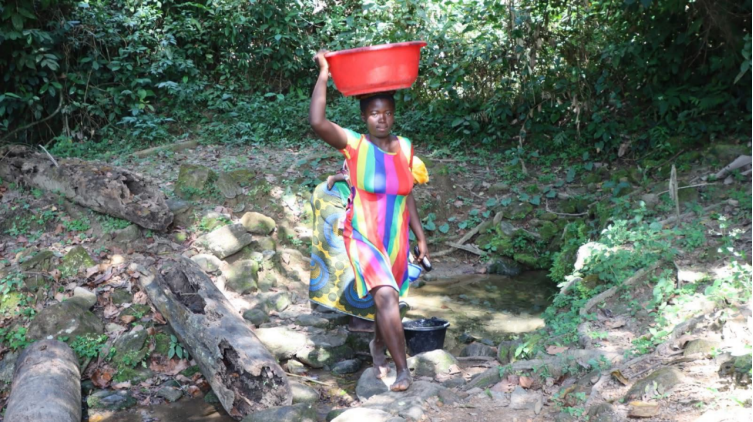
At dawn, women and young girls set out with empty containers balanced on their heads, walking more than a kilometer into the forest. Their destination is a stagnant pond—murky, unprotected, and unsafe, yet the only water source the community has relied on for generations.
The pond serves every household need: drinking, cooking, bathing, and washing. But its contamination is visible, and its dangers are hidden. Children frequently fall ill with diarrhea and other waterborne diseases. “We have been drinking water from this pond for as long as we can remember. Our children often get sick, but we have no other choice,” says Touwo, a mother in the village.
Fetching water is a daily burden that falls most heavily on women and girls. Pregnant women, mothers with infants, and school-aged girls make the exhausting trip under the hot sun, sometimes several times a day. During the dry season, the pond shrinks, forcing families to turn to a nearby river whose safety is equally uncertain. The Village Chief has repeatedly described the lack of safe drinking water as the community’s most urgent challenge.
Yet, amid hardship, resilience defines Dopa. Children still walk long distances to attend school, encouraged by parents who believe education is the path to a better future. Their determination reflects the hope that one day, life in Dopa will change.
Dopa not alone
Dopa’s story is not unique. Across Liberia, thousands of rural communities face similar struggles. Despite progress in urban centers, access to safe drinking water remains one of the country’s most pressing development challenges. National surveys show that many households, especially in remote areas, depend on rivers, ponds, and creeks—sources that expose families to preventable diseases and undermine public health.
The burden falls disproportionately on women and children, reinforcing cycles of poverty and inequality. Girls often miss school because of water-fetching duties, while mothers spend hours each day walking long distances, leaving little time for economic activities or rest.
Development advocates argue that solutions are within reach. The installation of boreholes and protected water points could transform communities like Dopa, reducing disease, improving sanitation, and easing the workload of women and girls. For Liberia, expanding access to clean water is not just about infrastructure—it is about dignity, health, and opportunity.
A Symbol of Hope
For the people of Dopa, safe drinking water represents more than pipes and pumps. It symbolizes the possibility of a healthier, more productive future. It is the difference between surviving and truly living, between constant worry and the chance to thrive.
Dopa’s struggle is Liberia’s struggle. And its hope—that one day clean water will flow freely—is shared by countless communities across the nation.