












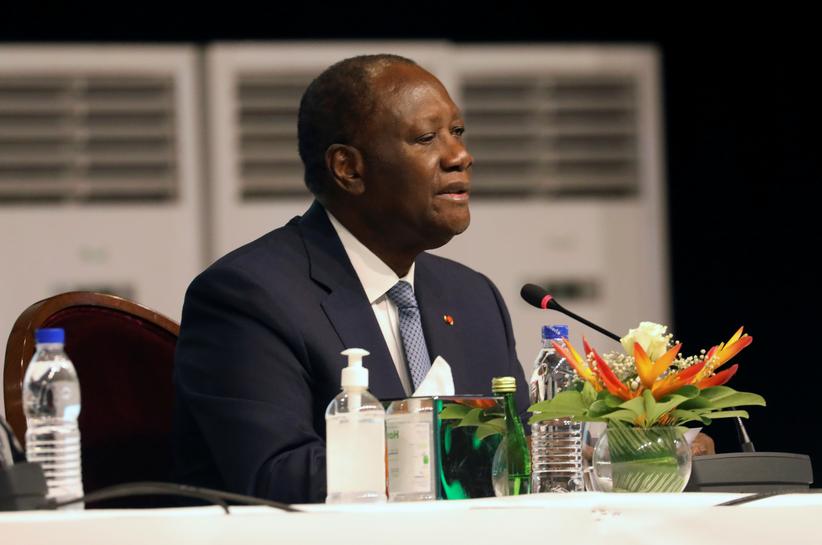
In the wake of the ruling RHDP party’s sweeping victory in the December 2025 legislative elections, President Alassane Ouattara has unveiled a bold restructuring of the Ivorian executive branch, signaling both consolidation of power and a recalibration of priorities for the next five years.
The official communiqué, released Friday, January 23, 2026, outlines a government designed for “operational efficiency.” The reshuffle elevates key figures in security and economic management while rotating seasoned technocrats into new portfolios, underscoring Ouattara’s intent to blend continuity with innovation.
The Vice-Prime Ministry
In a move that redefines the political hierarchy, Defense Minister Téné Birahima Ouattara has been appointed Vice-Prime Minister, a title absent from recent Ivorian protocol.
While retaining his defense portfolio, the new designation positions him as a pivotal bridge between the Prime Minister’s office and sovereign ministries. Analysts argue the appointment reflects the administration’s prioritization of national security amid regional instability, particularly as West Africa grapples with insurgencies and shifting alliances.
“This is more than symbolism,” noted one Abidjan-based political analyst. “It institutionalizes a dual command structure that strengthens coordination between civilian governance and military oversight.”
Economic Technocrats Reassigned to Strategic Fronts
President Ouattara’s reshuffle repositions trusted technocrats into roles critical for Côte d’Ivoire’s development agenda. Nialé Kaba, formerly Minister of Planning and Development, now serves as Minister of State for Foreign Affairs, a move seen as aligning diplomacy with the country’s ambitious 2026–2030 economic targets.
Moussa Sanogo, previously Minister of Budget, takes charge of Urban Planning and Housing, where he faces the daunting challenge of addressing Abidjan’s chronic housing crisis. Meanwhile, Djibril Ouattara has been appointed to lead the newly created Ministry of Digital Transition, signaling Côte d’Ivoire’s determination to leap into the digital economy and embrace technology-driven innovation.
Stability in Core Institutions
Despite the reshuffle, the government’s “regalian pillars” remain intact. General Vagundo Diomandé (Interior) and Jean Sansan Kambilé (Justice) retain their posts, ensuring continuity in internal security and judicial oversight. This balance between change and stability reflects Ouattara’s strategy of reinforcing trusted institutions while injecting dynamism into economic and social sectors.
Immediate Outlook
The restructuring follows the reconfirmation of Prime Minister Robert Beugré Mambé just 48 hours earlier, highlighting the President’s urgency to “hit the ground running.”
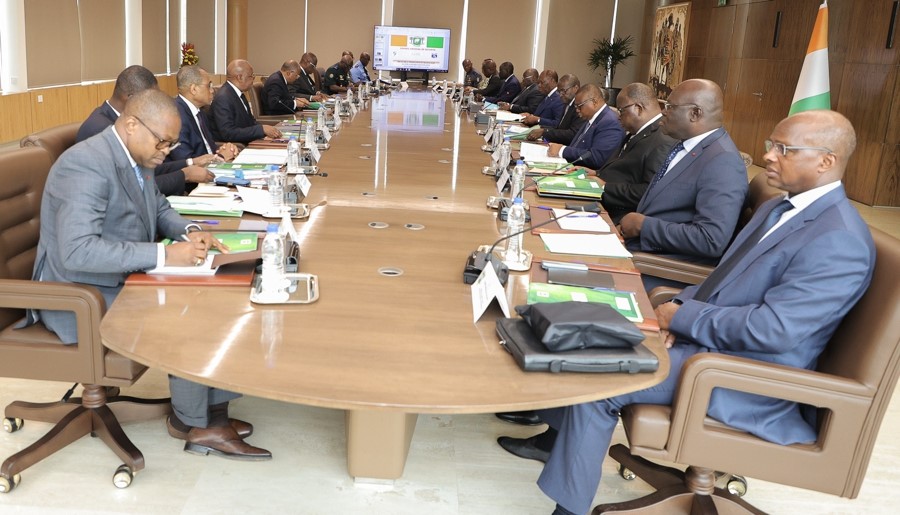
The first Council of Ministers, took place on Saturday, January 24 at 11:00 AM, unveiled the 2026 legislative agenda. Observers anticipate a strong emphasis on housing, digital transformation, and regional diplomacy.
“This is not just a change of names, but a change of pace,” remarked one analyst. “By placing heavyweights in new sectors, Ouattara is demanding measurable results rather than symbolic presence.”
The overhaul is being closely watched across West Africa, where Côte d’Ivoire’s stability and economic performance often set the tone for regional dynamics. The elevation of security leadership reflects broader concerns about cross-border threats, while the emphasis on digital transition and housing underscores the administration’s bid to position Abidjan as both a secure and modern hub in the region.
For international partners, the reshuffle offers a clearer roadmap: a government anchored in stability but oriented toward innovation, diplomacy, and social equity.