












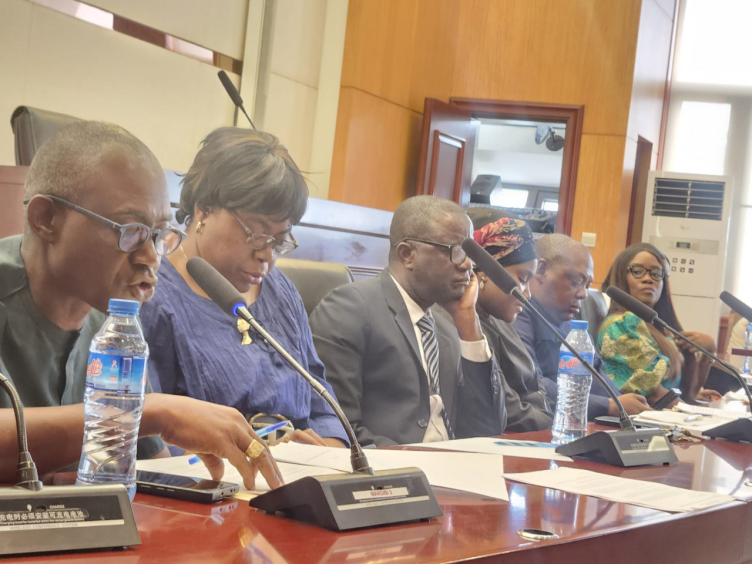
A heated legal debate unfolded in Liberia’s Senate on Wednesday as the Liberia Anti-Corruption Commission (LACC) and the Law Reform Commission (LRC) clashed over proposed amendments to the country’s Anti-Corruption Law. At the center of the dispute is a controversial provision that would shift the burden of proof in corruption cases from prosecutors to the accused.
The Proposed Amendments
Drafted by the LRC, the legislation seeks to introduce illicit enrichment laws in line with the United Nations Convention Against Corruption (UNCAC). The reforms would require public officials to justify wealth that significantly exceeds their lawful income.
Cllr. Bornor Varmah, Chairperson of the LRC, argued that the changes are essential to strengthen accountability, deter bribery, and enhance Liberia’s credibility with international financial institutions. He told senators that the reforms would help recover stolen assets, redirect funds to public services such as healthcare and education, and position Liberia as a more attractive destination for foreign investment.
“The law would establish a paradigm shift in the burden of proof,” Varmah explained. “Once the state demonstrates a financial discrepancy, the accused must provide a reasonable explanation for their assets.”
LACC’s Constitutional Concerns
The LACC, however, raised strong objections. Chairperson Cllr. Alexandra K. Zoe warned that shifting the burden of proof undermines constitutional protections against self-incrimination, citing Articles 20(A) and 21(b) of Liberia’s 1986 Constitution.
“While the Commission welcomes the removal of statutes of limitations and the criminalization of illicit enrichment, we are deeply concerned that shifting the burden of proof may violate constitutional rights,” Zoe told lawmakers. She cautioned that such contradictions could lead the Supreme Court to dismiss corruption cases, weakening the fight against graft.
Zoe also criticized provisions allowing the removal of LACC officials by the executive branch, arguing that such measures would compromise the Commission’s independence. “We can be investigating the executive, yet the same executive has the power to remove us at will. That undermines the robustness of our institution,” she said.
Legislative Review Continues
Despite objections raised during the drafting process, Zoe noted that the LRC insisted on retaining the disputed clauses. Senators concluded the hearing after hours of testimony, pledging to continue consultations with integrity institutions as the review process moves forward.
Representatives from the Office of the Ombudsman and the Governance Commission also attended, though the latter was dismissed because its chairperson has not yet been confirmed by the Senate.
The debate underscores Liberia’s struggle to balance aggressive anti-corruption measures with constitutional safeguards, a challenge that will shape the country’s governance and international standing in the years ahead.