










ABIDJAN – The backbone of Côte d’Ivoire’s economy is facing a historic breaking point.
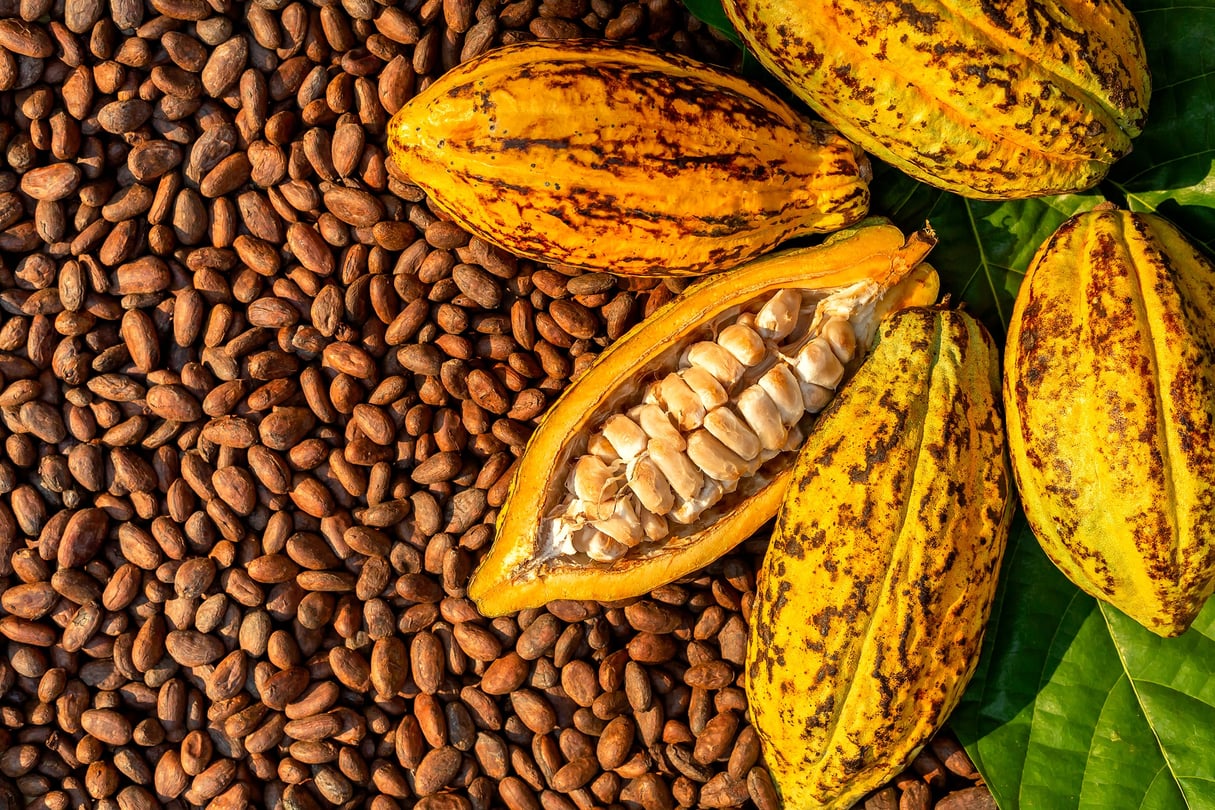
On Wednesday, March 26, 2026, the National Organization of Coffee-Cocoa Producers (ONPCC-CI) issued a scathing declaration accusing the Coffee-Cocoa Council (CCC) of presiding over an “economic disaster.” The group warned of a nationwide general strike if 60,000 tons of blocked cocoa are not cleared by the end of March.
At the center of the conflict is CCC Director General Koné Yves Brahima and the government’s handling of a 291 billion FCFA ($480 million USD) emergency fund intended to rescue the 2025–2026 crop year.
A “Historic Price” Turns Into a Trap
The season opened on October 1, 2025, with President Alassane Ouattara announcing a record farmgate price of 2,800 FCFA/kg. But producers say the celebration was short-lived. A sudden administrative change on February 27, 2025, moved the start of the “mid-crop” season forward to March 1—one month earlier than usual.
This adjustment triggered a 57% price collapse, with cocoa after March 1 valued at just 1,200 FCFA/kg. Farmers holding unsold stocks from the main harvest now face losses of 1,600,000 FCFA per ton. “It is a maneuver that causes heavy financial and economic prejudice,” the ONPCC-CI declared, adding that “the eyes and ears of the producers are now turned toward President Alassane Ouattara.”
Allegations of Sabotage and Favoritism
Producers accuse the CCC of sabotaging clearance efforts by deleting loading bills uploaded to the SYDORE electronic system, preventing the Interprofessional Agricultural Organization (OIA) from meeting its quotas. They also allege favoritism, claiming that while cooperatives remain blocked, private operators such as SITAPA and TRANSCAO NÉGOCE were granted unilateral concessions for thousands of tons.
The CCC is further accused of denying the existence of the crisis and refusing independent audits of the emergency fund. Despite the allocation of resources to clear 100,000 tons of residual stock, 60,000 tons remain stuck in cooperative warehouses.
Echoes of 2016
The turmoil recalls the 2016–2017 cocoa crisis, which led to the dismissal of CCC leadership at the time. Producers argue that today’s crisis is not simply the result of international price fluctuations but stems from governance failures, inaccurate harvest forecasts, and the licensing of exporters without sufficient financial capacity.
Countdown to a Strike
The ONPCC-CI, joined by the Central Trade Union and the ASPCACC, has issued three immediate demands: the suspension of Director General Koné Yves Brahima pending a full audit, the creation of a joint oversight committee between the OIA and CCC to manage the remaining 60,000 tons, and proof that the 291 billion FCFA fund is reaching farmers directly.
“If the 60,000 tons of cocoa are not removed by the end of March 2026, the producers of Côte d’Ivoire reserve the right to enter into a general strike across the entire national territory,” the declaration warned.
With Côte d’Ivoire producing nearly 40% of the world’s cocoa, a total shutdown of the sector would not only destabilize the national economy but could send global chocolate prices into an unprecedented tailspin.