










Liberia’s Finance and Development Planning Minister Augustine Kpehe Ngafuan has disclosed that the government will submit a supplementary budget to the Legislature in February, clarifying that the 2025 National Budget remains under execution despite the Legislature’s recent passage of the US$1.2 billion FY2026 budget, which is now before President Joseph Nyuma Boakai for signature.
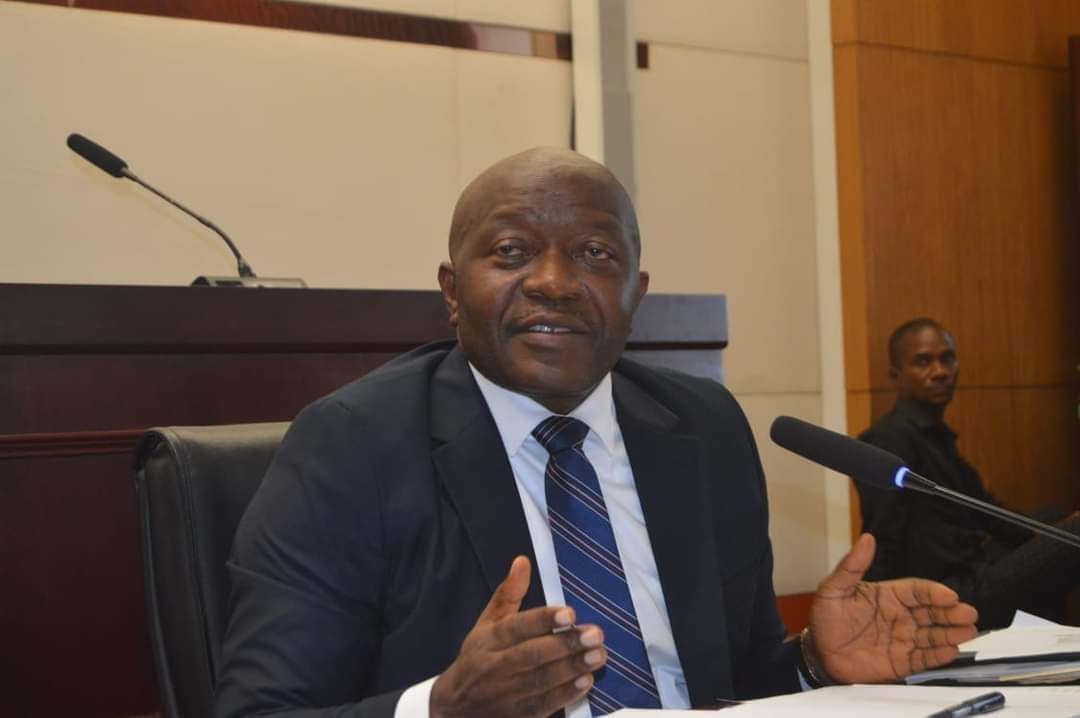
Speaking at the opening of the Ministry’s three-day FY2026 Budget Execution Workshop, Minister Ngafuan underscored urgency, transparency, and accountability as the guiding principles of Liberia’s fiscal management agenda.
“It has been a long time since a supplementary budget was submitted to the Legislature. But we are still executing the 2025 budget,” Ngafuan stated, urging ministries and agencies to accelerate spending before the March deadline.
He cautioned that delays could expose institutions to scrutiny from oversight bodies, noting:
“We have 90 days up to the end of March. Some of you still have to execute so that the March deadline doesn’t catch you off guard. Because at that point, the Comptroller, the Auditor General, and their teams will come and draw a hard line on us.”
Ngafuan tied budget execution directly to President Boakai’s development priorities, warning bureaucrats against unnecessary delays.
“If you delay, you are delaying President Joseph Boakai—and the President wants speedy execution,” he said.
He emphasized that the Ministry’s role is to ensure that funds are utilized effectively rather than allowed to lapse.
Defending the FY2026 Budget
Addressing critics who have described the US$1.2 billion FY2026 budget as unrealistic or “phantom,” Ngafuan pushed back firmly.
“The critics are criticizing. They said those things before. They need to understand that they are dealing with meticulous men and women,” he asserted.
He clarified public misconceptions, explaining that the budget represents a plan to raise and allocate resources over 12 months, not funds already deposited in government accounts.
“Some people think when we say a US$1.2 billion budget, the money is already in the Central Bank. No. It is a plan to raise money over 12 months and execute it through sustained effort,” he explained.
Ngafuan outlined strategies to mobilize revenue and implement the budget progressively, stressing that early execution is critical to avoiding the pitfalls of past delays.
Avoiding “Tail-End Execution”
Reflecting on previous fiscal challenges, Ngafuan said execution in 2026 could be smoother if current momentum is sustained.
“If things remain this way, execution will be smoother in 2026 than it was in previous years,” he noted, while acknowledging risks posed by external shocks.
He emphasized the administration’s determination to avoid “tail-end execution,” where spending is rushed at the close of the fiscal year.
“We don’t want tail-end execution. We want smooth execution—first quarter, second quarter, third quarter, and fourth quarter,” Ngafuan stressed.
Procurement Delays and Institutional Readiness
Ngafuan identified procurement delays as a recurring challenge, particularly during the transition to new systems.
“Last year, execution delays occurred because many ministries, partners, and vendors did not know how to navigate the procurement platform. Some people were stuck for months just trying to understand the process,” he said.
He urged institutional leaders to act proactively by ensuring procurement plans are approved, noting their direct link to cash flow management.
Revenue and Reform Challenges
The Minister acknowledged that some delays were unavoidable but stressed they were not always caused by revenue shortfalls.
“We call it revenue-expenditure smoothing. But there are situations where revenue is available, and things are still delayed,” he explained.
Using a mathematical analogy, Ngafuan illustrated the government’s progress:
“Sometimes you pray to start from zero. But in some cases, you inherit a negative balance. The effort to move from negative 100 to zero is enormous before you even begin to grow.”
He concluded on a note of cautious optimism:
“We are not where we want to be yet, but one thing is incontestable: we are not where we were yesterday. Today is better than yesterday.”
Mixed Reactions to Supplementary Budget Proposal
Ngafuan’s announcement that the Ministry plans to submit a supplementary budget in February—despite the conclusion of the 2025 fiscal year and the passage of the FY2026 budget—has generated mixed reactions.
Critics argue that the Ministry should instead prioritize collaboration with the Executive Mansion to ensure the FY2026 budget is promptly signed into law, thereby enabling regular execution. One critic, Allen Jackson, described the move as “a recipe for corruption” and urged the Legislature to reject any supplementary budget under the current circumstances.
Efforts to obtain a response from the Ministry were unsuccessful at press time.
Supporters, however, point to provisions in Liberia’s Public Financial Management (PFM) Law. Section 17 authorizes the Minister of Finance to collect revenues and approve expenditures in line with the proposed budget—up to one-twelfth of the previous fiscal year’s approved budget—when the Legislature has not yet approved a new national budget.
The law further requires that any expenditure made under this arrangement be captured in the subsequent financial outturn.