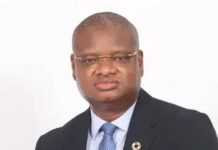



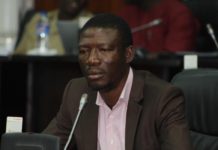








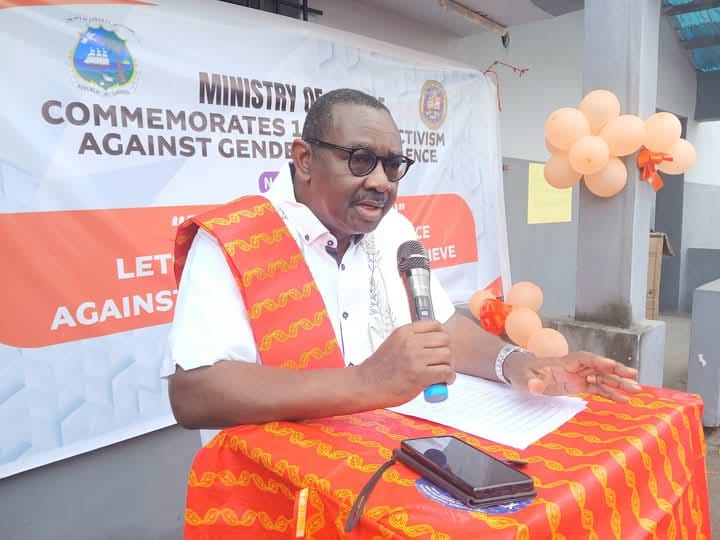
Cllr. N. Oswald Tewh, Liberia’s Minister of Justice and Attorney General, has provided a legal opinion in response to the Supreme Court of Liberia’s recent decision in the country’s continuing leadership crisis at the House of Representatives.
The Supreme Court ruled that any setting that did not comply with the requirements of Articles 33 and 49 of the Liberian Constitution is ultra vires (or “beyond the powers”) in the case brought forth by embattled speaker Jonathan Fonati Kofa after his removal by the members claiming to be the Majority bloc.
The Court did stress, however, that although it has the power to resolve constitutional issues, it is not allowed to impose resolutions on subjects that belong to the Legislature. It emphasized in particular the lack of legislative means to compel absent politicians to attend sessions, which is a major barrier to reaching a quorum.
Citing corruption and conflicts of interest, the majority of members had declined to attend sessions led by the speaker. Both parties claimed victory because the court was unable to identify which party was in violation of the Constitution.
However, Justice Minister Cllr. N. Oswald Tewh stated on Tuesday that the majority of House of Representatives members were not at fault and may lawfully move forward with the 2025 National budget approval process. President Joseph Boakai requested the opinion, and it was delivered. He agrees with the Court’s reading of the Liberian constitution’s Articles 33 and 49, which deal with parliamentary procedures and quorum requirements.
The Justice Minister reiterated that the House of Representatives needs a simple majority of members in order to perform business, including approving the budget. In his Opinion, Minister Tweh stressed that the Deputy Speaker has the legal authority to chair the legislative sessions when the Speaker is not present.
constitutionality
The constitutionality of the legislative process also depended on the existence of a quorum, the correct conduct of the proceedings, including the sergeant-at-arms convening the session and the chaplain providing prayers, as Tweh’s decision emphasized. Under these circumstances, he said, the majority’s actions, including the consideration and approval of the 2025 National Budget, were consistent with the House’s Rules and Constitution.
“After meeting the constitutional and procedural requirements, the majority members of the House have taken actions that are lawful and legitimate,” Cllr. Tweh stated in his judgment. Thus, the majority members can carry out the budgetary process as long as they adhere to the guidelines established in the Supreme Court’s decision.
The Legal opinion of Minister Tweh provides some clarity amidst the ongoing political turmoil in the legislature, which has raised concerns about the functioning of the government and the timely passage of the National budget. With this opinion, the Minister of Justice has paved the way for the House to proceed with legislative activities, including the crucial task of finalizing the 2025 budget.
The Supreme Court’s decision, coupled with his legal opinion, is expected to resolve some of the immediate challenges facing the House of Representatives while reaffirming the legal framework under which the legislature operates. The opinion of the Attorney General legalizing the majority members sitting also increases the pressure on Speaker Jonathan Fonati Koffa and his supporters.