








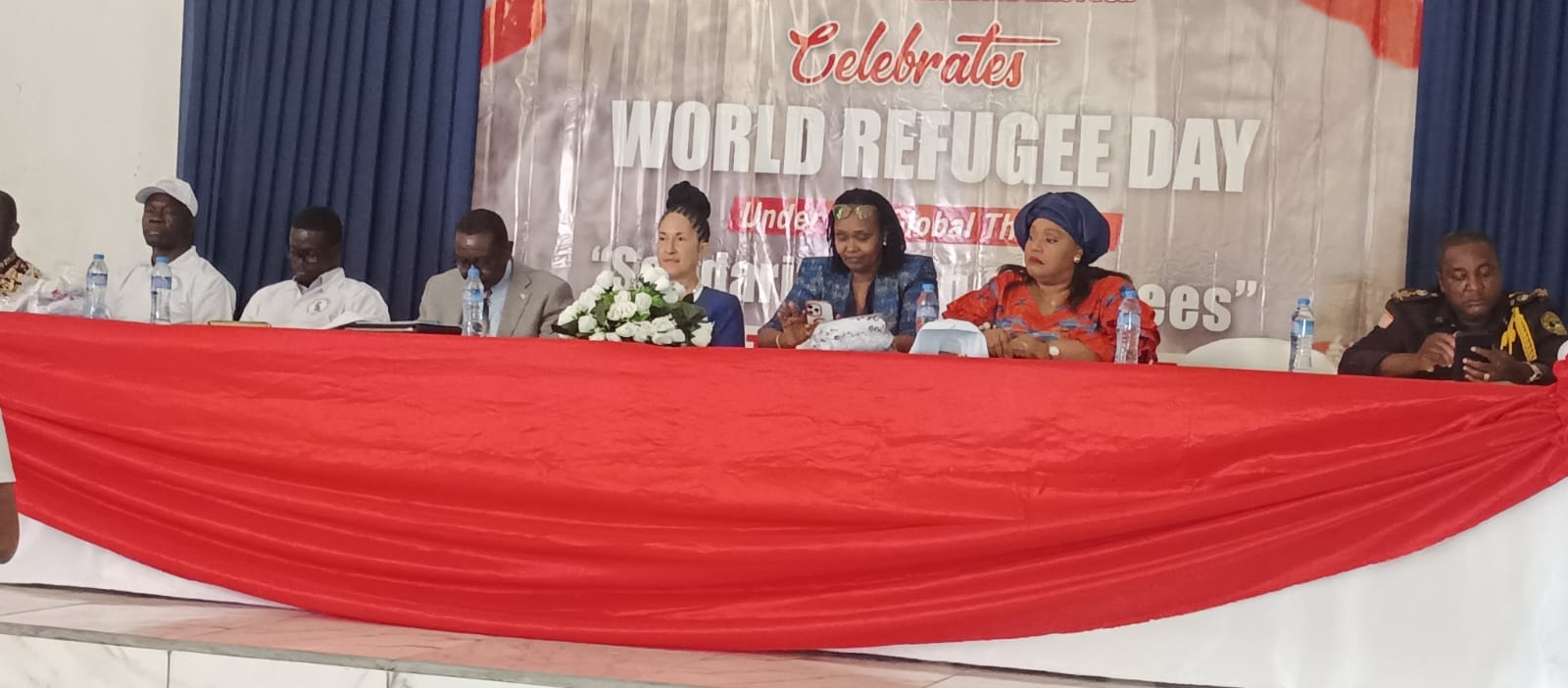
Liberia began its early commemoration of World Refugee Day with a powerful ceremony that blended reflection, gratitude, and a renewed call to action.
Executive Director Cllr. Cole Bangalu of the Liberian Refugee Repatriation Commission (LRRRC) opened the event, reminding the audience that behind every refugee statistic lies a deeply human story.
“World Refugee Day is not only a day of reflection, it is also a day of action,” Bangalu said. “It reminds us that beyond average statistics is a family seeking safety, a child longing for education, a mother striving to provide for her loved ones.”
Bangalu recalled Liberia’s own history of displacement during the civil conflict, when hundreds of thousands of Liberians sought refuge in neighboring countries. That experience, he noted, had instilled in Liberia a deep empathy for those forced to flee. Today, the country continues to host refugees from across the region, reaffirming its commitment to protection and hospitality.
This year’s national theme — “Say No to Irregular Migration, Say No to Human Trafficking” — carried particular urgency. Bangalu warned of the dangers of irregular migration, where too many fall prey to traffickers and smugglers. He emphasized Liberia’s collaboration with the United Nations, civil society, and local communities to strengthen refugee protection and migration governance.
Bangalu also highlighted the contributions of refugees themselves, describing them as “agents of development and partners in nation-building.” He shared a poignant example: six refugee children born in Liberia had graduated from high school and now aspired to attend university. Yet financial barriers threatened their dreams. With urgency, he appealed directly to the Education Minister and the President of the University of Liberia to support these young scholars. The audience responded warmly, affirming the importance of investing in refugee youth.
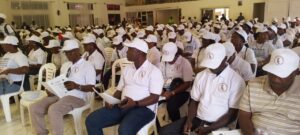
As the event drew to a close, Bangalu expressed gratitude to the Government of Liberia, the UNHCR, development partners, humanitarian actors, and host communities for their continued support. His final words were directed to the refugees themselves: “Your resilience, courage, and determination inspire us. Your contributions enrich our society. Together, let us build a world where no one is forced to flee, where dignity is protected, and where every displaced person can live in peace and hope.”
The ceremony took on added weight when Justice Minister Oswald Tweh addressed the gathering. He announced that Liberia’s courts had recently sentenced several human traffickers to a combined 110 years in prison. “This ruling is a victory for justice and a clear message that exploitation and abuse will not be tolerated in Liberia,” Tweh declared, drawing applause from the audience. His remarks underscored the government’s determination to confront trafficking head-on, aligning with the day’s theme.
The Liberian Attorney General stated that several traffickers who violate the rights of people seeking opportunities in Liberia and elsewhere have been prosecuted as part of the government’s zero-tolerance policy in protecting refugees and asylum seekers.
Liberia’s commemoration of World Refugee Day 2026 thus became more than a symbolic observance. It was a narrative of solidarity and justice — a reminder that while refugees carry stories of hardship, they also embody resilience, and that Liberia stands committed to protecting them while confronting the scourge of human trafficking with strength and resolve.
World Refugee Day is celebrated every year on June 20, but the LRRRC has decided to celebrate it on June 17 instead.