








Liberia has made significant progress in reducing black carbon emissions from the open burning of municipal solid waste, a major contributor to urban air pollution and short-lived climate pollutants.
With support from the Climate and Clean Air Coalition (CCAC) of the United Nations Environment Programme (UNEP), the country has strengthened institutional capacity, improved data collection and monitoring systems, and developed a comprehensive national strategy aimed at reducing emissions from waste burning.
The project titled “Liberia: Develop a Waste Sector Strategy that Reduces Emissions of Black Carbon from Open Burning” was implemented between October 2024 and September 2026 by GREENLIFE West Africa in partnership with the Environmental Protection Agency (EPA), Monrovia City Corporation (MCC), and Paynesville City Corporation (PCC). The project adopted a multi-stakeholder approach involving government agencies, municipalities, academic institutions, civil society organizations, and local communities.
One of the project’s key achievements is the completion of Liberia’s first Black Carbon Assessment Report, which established evidence-based baselines for emissions from open waste burning. Using the United States Environmental Protection Agency’s Solid Waste Emissions Estimation Tool (SWEET) and 2023 waste data, the assessment estimated black carbon emissions equivalent to approximately 54,140 tonnes of carbon dioxide (tCO₂e) in Monrovia and 36,707 tCO₂e in Paynesville, representing a combined total of nearly 90,847 tCO₂e.
What the findings mean?
The findings provide Liberia with a stronger evidence base for integrating black carbon mitigation measures into its climate commitments under the country’s Nationally Determined Contributions (NDC 3.0). Community-level assessments conducted in 2025 across ten formalized settlements also identified inadequate waste collection services as a key driver of open burning. Health surveys further revealed that 54 percent of households reported smoke-related health symptoms, with women and children among the most affected groups.
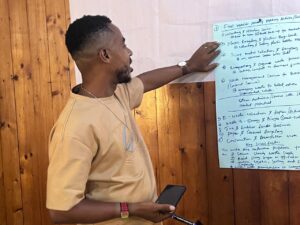
To strengthen national and local capacity, GREENLIFE West Africa, under the auspices of the Waste Sector Technical Working Group (WSTWG), organized four technical training sessions and a learning exchange between 2025 and 2026.
Participants included representatives from the EPA, municipal authorities in Monrovia, Paynesville, Kakata, and Gbarnga, line ministries, community-based organizations, and academic institutions.
The trainings focused on practical applications of the SWEET model, Kobo Toolbox data collection systems, low-cost air-quality monitoring sensors, waste auditing methodologies, and data visualization tools. Participants gained hands-on experience in collecting, analyzing, and reporting waste management and air pollution data, while also improving their understanding of black carbon and PM₂.₅ monitoring requirements under national and international reporting frameworks.
Public awareness and community engagement also formed a central component of the project. In collaboration with the Paynesville City Corporation, GREENLIFE West Africa conducted two awareness campaigns in Woodcamp and Rehab communities, highlighting the environmental and health impacts of open waste burning and encouraging residents to subscribe to Community-Based Enterprises (CBEs) for regular waste collection services.
Supporting communication activities included the publication of two online articles, production of two short documentary videos, a radio talk show, and a radio drama aimed at promoting sustainable waste management practices and public understanding of air pollution issues.
A major policy outcome of the initiative is the development of the National Waste Management Strategy to Reduce Black Carbon Emissions from Open Burning of Municipal Waste (2026–2035). Led by GREENLIFE West Africa, the strategy was designed to align with Liberia’s National Solid Waste Management Policy and the sanitation objectives of the ARREST Agenda for Inclusive Development (AAID).

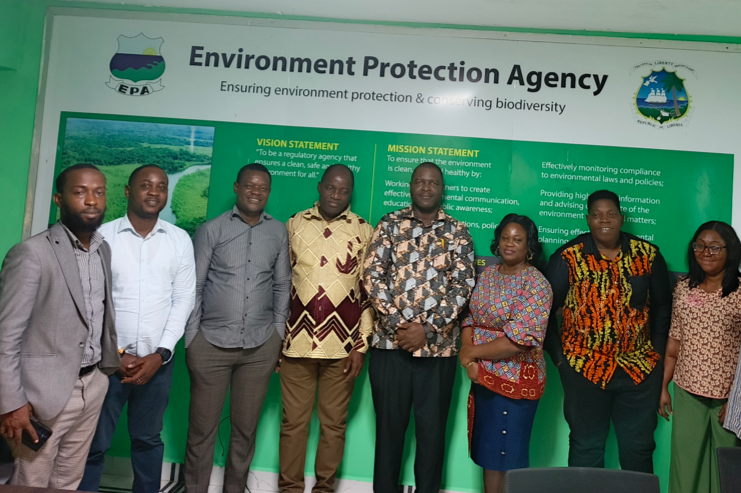
The strategy underwent extensive review by technical experts from the EPA, Monrovia and Paynesville City Corporations, the Water, Sanitation and Hygiene (WASH) Commission, the National Association of Community-Based Enterprises (NACOBE), the Liberia Solid Waste Management Association (LISWA), the University of Liberia, and Liberia’s CCAC focal point.
Stakeholders say the combined achievements of the project have positioned Liberia to move beyond assessment and planning toward concrete action. Through strengthened national leadership, municipal collaboration, private-sector engagement, and community participation, the country is laying the foundation for cleaner air, improved public health, more sustainable waste management systems, and measurable contributions to its climate and development goals.