











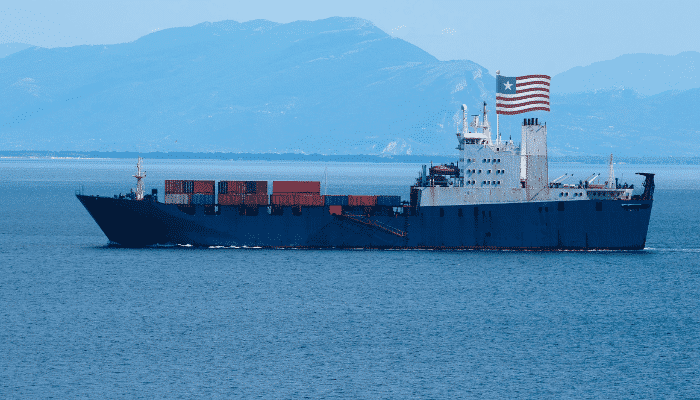
Liberia has widened its position as the world’s largest ship registry, opening a lead of more than 100 million gross tons over its nearest competitor as shipowners continue to move vessels away from Panama, the flag state it overtook three years ago, according to industry data.
The Liberian registry stood at 317.4 million gross tons as of Sept. 1, according to Clarksons Research data cited by maritime news outlet Splash on Sept. 25. The Marshall Islands ranked second with 212.7 million gross tons, while Panama slipped to third place with 196 million gross tons.
Liberia’s advantage over the Marshall Islands now stands at approximately 104.7 million gross tons, a gap larger than the total registered fleets of either Singapore or Hong Kong, the world’s fourth- and fifth-largest ship registries.
Clarksons data show Liberia’s fleet expanded by 8.7% this year, matching growth in the Marshall Islands registry. In contrast, Panama’s fleet contracted by 15% from 230.5 million gross tons recorded at the end of 2025.
Although Panama maintains a larger number of registered vessels, with 7,516 ships compared with Liberia’s 6,167, its fleet consists of smaller and older vessels on average. Gross tonnage, rather than vessel count, remains the primary measure of a registry’s size.
The age profile of the fleets highlights the differing market positions of the registries. Liberian-flagged vessels have an average age of 12.6 years, compared with 19.5 years for Panama, the oldest average among the top five global registries. Industry observers generally associate younger fleets with improved efficiency, safety standards and environmental performance.
From second to first place
Liberia’s rise to the top is a relatively recent development. Panama dominated global ship registration for roughly three decades until Liberia overtook it in 2023. In June this year, Liberia became the first ship registry to surpass 300 million gross tons, reaching 307.3 million gross tons as of June 8, according to Clarksons figures reported by Seatrade Maritime. The report also noted that Liberian-flagged vessels account for 17% of the global fleet and that the registry has attracted 28% of worldwide newbuilding tonnage over the past two years.
Regulatory and geopolitical pressures have contributed to Panama’s decline. According to Splash, Panama’s maritime authority stopped accepting tankers and bulk carriers older than 15 years in 2025 as part of efforts to distance its registry from sanctioned and so-called shadow fleet vessels.
The report further stated that increased scrutiny by Chinese authorities of Panama-flagged ships followed Panama’s decision to remove operators linked to Hong Kong-based CK Hutchison from two canal ports. As a result, some shipowners have increasingly favored Liberia and the Marshall Islands, while certain Chinese leasing companies have reportedly required owners to reflag vessels from Panama as a condition for financing newbuildings.
Liberia has actively sought to capitalize on the shift. During the Posidonia shipping exhibition in Athens in June, the Liberia Maritime Authority announced that approximately 150 vessels were expected to join the Liberian registry following meetings led by Maritime Commissioner Neto Zarzar Lighe Sr. The authority also reported growing interest among shipowners in recruiting Liberian seafarers.
The continued expansion of the registry carries economic significance for Liberia, where maritime revenue remains an important source of government income. An analysis published in July by researcher George Tengbeh estimated that maritime-related revenue would contribute approximately US$30 million to the national budget in 2026.
The Liberian Registry traces its origins to 1948 and is among the oldest open ship registries in the world. Established to serve international shipowners, it has evolved into a major force in global shipping, attracting vessels from leading maritime companies across Europe, Asia and the Americas. The registry is administered by the U.S.-based Liberian International Ship and Corporate Registry (LISCR) under the supervision of the Liberia Maritime Authority