





MONROVIA – President Joseph Nyuma Boakai has fueled speculation about his political future after suggesting publicly, for the first time, that he may consider seeking a second term in office when Liberians return to the polls in 2029.
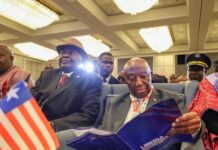
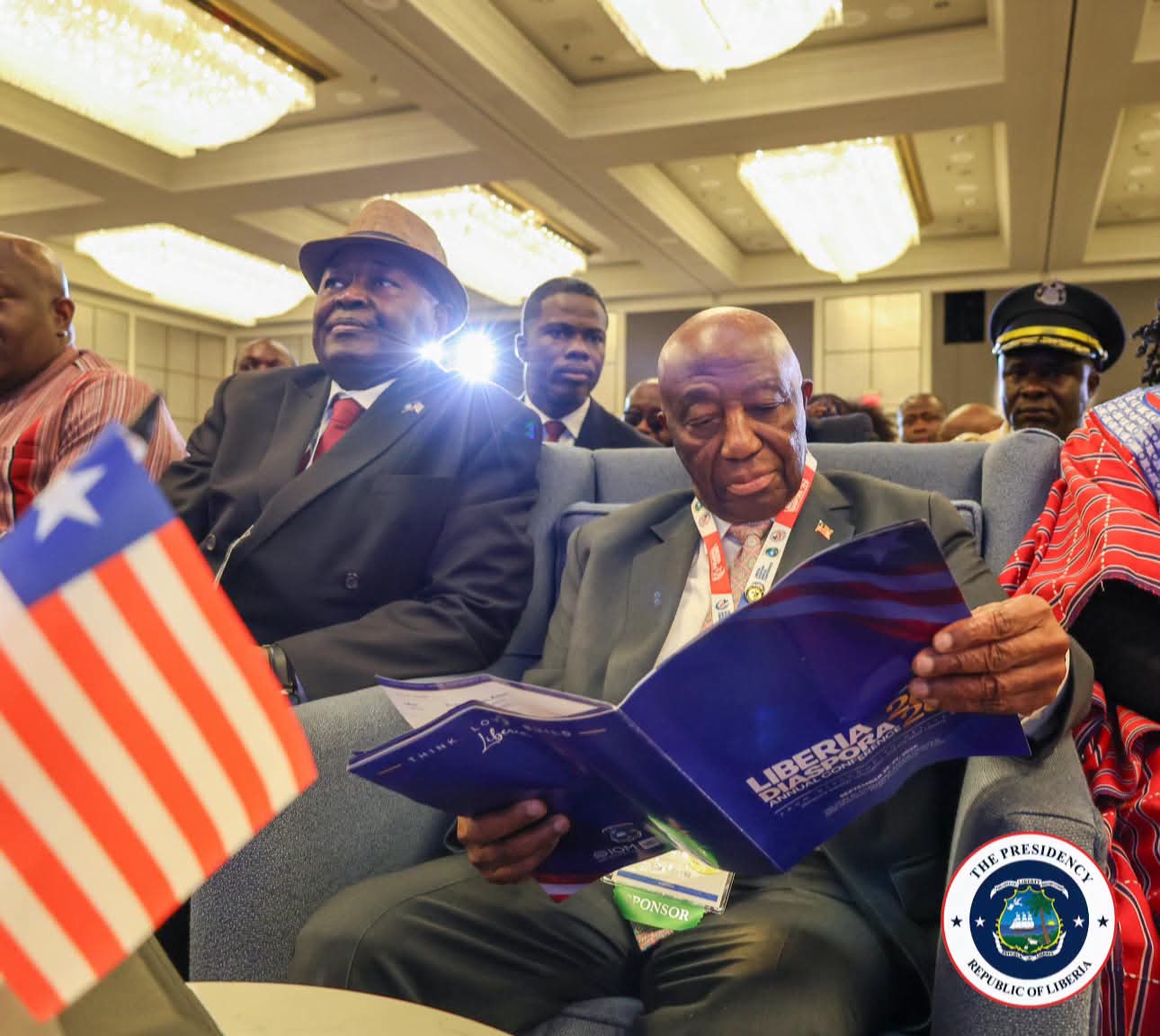
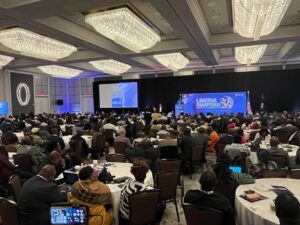
The remarks were made during an engagement with Liberians in the United States at the Liberia Diaspora Annual Conference 2026 on Sunday.
According to reports from the event, President Boakai responded to a question about whether he intends to seek re-election by turning the question back to the audience and asking whether they would support another bid. After receiving an affirmative response, he smiled and said: “I am still entitled to one term.”
The comment immediately triggered debate over whether the President was signaling an intention to run again or merely acknowledging his constitutional eligibility to do so.
Under Article 50 of Liberia’s Constitution, a president serves a six-year term and may serve a maximum of two terms. Having assumed office in January 2024, Boakai remains constitutionally eligible to contest the 2029 presidential election.
However, political observers note that a distinction exists between affirming eligibility and formally declaring a candidacy.
Signal, Not Declaration
President Boakai did not announce a re-election campaign, launch a political organization, or explicitly state that he intends to run in 2029.
At the same time, analysts argue that his response went beyond a simple constitutional observation. Coming directly after engaging an audience on the prospect of a second term, the statement can reasonably be interpreted as an indication that the option remains under consideration.
The significance of the exchange lies less in the constitutional point itself than in the fact that the sitting President publicly engaged a direct question about his political future.
As such, the remarks are more accurately described as a political signal than a formal declaration of candidacy.
Piah’s Earlier Position
The comments also contrast with the more guarded public stance previously articulated by Information Minister Jerolinmek M. Piah.
In a February 2026 interview, when asked about the President’s prospects in the next election, Piah emphasized governance over electoral politics.
“What the President thinks about every day is the next generation, not the next election,” Piah said. “What we are doing is to meet the needs of the people, not about the next election. The people will decide about the next election.”
While Piah’s statement did not rule out a future re-election campaign, it sought to separate the administration’s governing agenda from political calculations surrounding 2029.
Boakai’s latest remarks stop short of contradicting that position but represent the first instance in which the President himself has publicly addressed the question in a way that has heightened political interest.
Lessons From the Sirleaf Precedent
A useful historical comparison can be found in former President Ellen Johnson Sirleaf’s re-election announcement in January 2010.
Sirleaf left little room for ambiguity when she used her Annual Message to the National Legislature on January 25, 2010, to announce that she would seek a second term in the 2011 presidential election.
She said the declaration was intended to end speculation surrounding her political intentions and presented herself as a candidate for re-election.
The announcement was delivered before the National Legislature during a constitutionally mandated address, giving it the character of a formal and unequivocal political declaration.
That contrasts sharply with Boakai’s recent remarks, which emerged during an informal exchange with members of the Liberian diaspora and did not include an explicit declaration of candidacy.
A Different Political Context
Boakai entered office after defeating then-President George Weah in the 2023 presidential runoff, securing a six-year mandate that runs through 2030.
Unlike Sirleaf’s announcement in 2010, Boakai has not explicitly stated that he intends to contest the next election. Instead, his comments appear to have left the door open to the possibility.
The discussion also comes amid growing political activity within the ruling Unity Party, whose officials have publicly promoted a “Boakai 2029 Reelection Movement.”
Party Secretary General Amos B. Tweh has previously indicated that preparations for the next presidential contest are already underway.
Yet party mobilization and a President’s personal decision to run remain separate matters.
Boakai’s wording focused on constitutional entitlement rather than political commitment, leaving unanswered the central question of whether he will ultimately seek another mandate.
For now, the available evidence supports a measured conclusion: President Boakai has publicly acknowledged that a second term is an option available to him and has not ruled out pursuing it.
His comments can reasonably be interpreted as a signal that re-election remains a possibility, but they do not constitute a formal announcement of candidacy.
The distinction is significant. An official declaration would carry implications for party organization, campaign planning, fundraising, government communications, and the broader political landscape ahead of 2029.
What is clear is that discussion about presidential succession and the next election cycle has begun to emerge years before Liberians return to the polls.
With members of the ruling party already organizing around the prospect of a Boakai re-election campaign, the President’s remarks are likely to remain the subject of political scrutiny.
For now, the most defensible interpretation is that Boakai has neither formally launched a 2029 campaign nor dismissed the possibility. He has signaled that a second term remains a live option. Whether that signal evolves into a formal candidacy will depend on a clearer declaration from the President himself.