









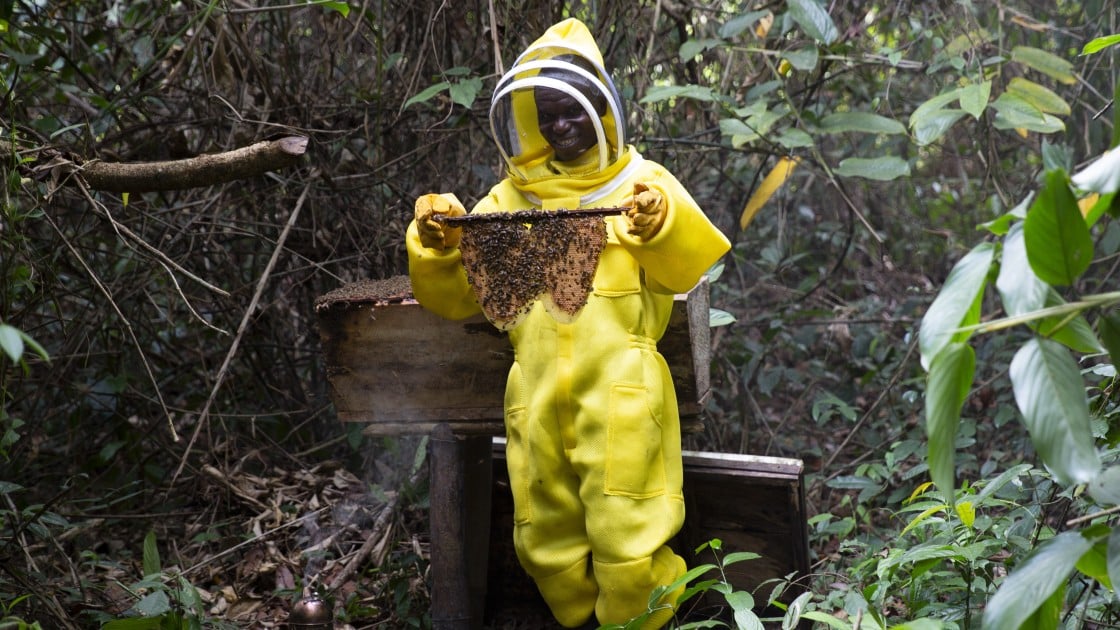
Long before dawn breaks over Liberia’s forests and farmlands, thousands of honeybees are already at work, moving from flower to flower, pollinating crops and producing one of nature’s most valuable products.
Yet despite the growing importance of honey production to rural livelihoods, Liberia has never had a clear picture of who its beekeepers are, where they are located, or how much honey they produce.
That is beginning to change.
For the first time in the country’s history, Liberia has conducted a nationwide honeybee survey, an ambitious effort that stakeholders hope will transform beekeeping from a largely overlooked rural activity into a thriving agricultural and conservation enterprise.
The findings of the survey were presented during a national validation workshop convened by the Ministry of Agriculture in partnership with the Society for the Conservation of Nature Liberia (SCNL) and other organizations working in the sector recently.
The gathering brought together government officials, development partners, conservationists, and beekeepers to review the results and chart the future of the industry.
The survey, which spans all 15 counties, provides the first comprehensive assessment of Liberia’s beekeeping landscape. It examines the number of beekeepers across the country, production levels, harvesting and processing methods, market linkages, and the environmental conditions that support honey production.
For many participants, the exercise represents more than just data collection. It is the beginning of a new chapter for a sector with significant economic and environmental potential.
“This information is important because it gives us a foundation for decision-making,” said Austin G. Yeanay, Director of Extension at the Ministry of Agriculture.
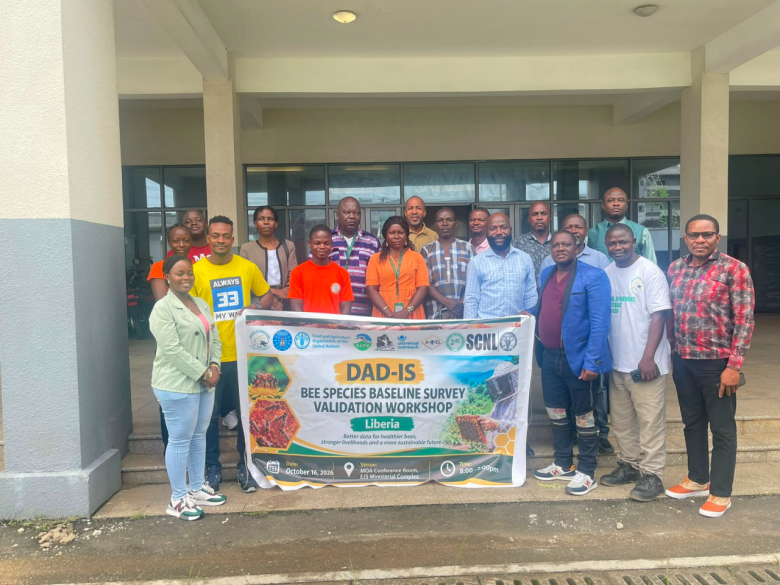
Addressing participants at the workshop, Yeanay noted that although the survey process experienced delays, the information gathered from communities nationwide would help guide future interventions and support the growth of the industry.
He called on stakeholders to critically review the findings and contribute recommendations that can help move the sector forward.
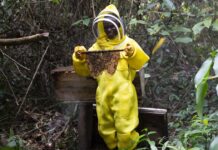
Across Liberia, beekeeping has quietly emerged as a source of income for many farmers. Unlike some agricultural activities, it requires relatively small amounts of land and can provide earnings while supporting crop production through pollination. Yet limited information about the industry has long made it difficult for policymakers and development organizations to effectively support producers.
The new survey seeks to fill that gap.
For organizations that have invested years in promoting beekeeping, the assessment offers a rare opportunity to understand how the sector has evolved.
Cecil S. Wilson, Country Director of Universal Outreach, said the study will help stakeholders evaluate progress in communities where beekeeping projects have been implemented and identify challenges that continue to hinder growth.
Having worked in Liberia for more than a decade, Wilson said the survey provides an opportunity to measure developments in the industry and better understand the realities faced by producers across the country.
“This is a chance for us to ensure the final report reflects what is actually happening in the field,” he told participants, urging them to contribute openly during the validation process.
For conservation experts, the significance of the survey goes beyond economics.
According to Michael E. Taire, Program Manager of SCNL, Liberia has never before undertaken a national assessment focused specifically on honey production. As a result, there has been no reliable baseline against which future changes in production, participation, and market access could be measured.
The survey aims to change that.
Researchers examined not only the number of farmers engaged in beekeeping, but also where they are located, how they harvest honey, the plant species that attract bees, and the methods they use to process and market their products.
The assessment also explores whether producers primarily sell honey within their communities or reach larger commercial markets such as supermarkets and regional buyers.
By capturing this information, stakeholders believe they will be better positioned to identify opportunities for improving quality, increasing production, and expanding access to more profitable markets.
“The survey allows us to understand the entire value chain,” Taire explained. “It tells us where producers are, how they operate, and what opportunities exist to strengthen the sector.”
Those opportunities could eventually extend beyond Liberia’s borders.
Industry advocates say that with the right investments in production standards, processing, and marketing, Liberian honey could become more competitive in regional and international markets. The survey findings are expected to help inform strategies aimed at improving product quality and connecting producers to larger buyers.
Beyond honey sole in the Market
But the importance of honeybees extends far beyond the jars of honey sold in local markets.
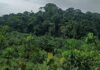
Honeybees play a vital role in maintaining healthy ecosystems by pollinating flowering plants, many of which are found in Liberia’s forests and agricultural landscapes. Their survival depends on the preservation of these natural habitats.
That connection between beekeeping and conservation was a recurring theme throughout the workshop.
Taire encouraged communities, particularly those living near forest areas, to embrace beekeeping while protecting the forests that sustain bee populations. Planting trees and preserving flowering vegetation, he said, can create favorable conditions for both honey production and biodiversity conservation.
The message reflects a growing recognition that environmental protection and economic development do not have to be competing priorities. In many rural communities, they can reinforce one another.
The survey was conducted with support from the Food and Agriculture Organization of the United Nations (FAO) through the Apimondia programme, with the Ministry of Agriculture leading implementation alongside SCNL and other sector partners.
Organizations participating in the validation process included the Wild Chimpanzee Foundation, Samaritan’s Purse, Universal Outreach, and the Association of Beekeepers of Liberia, among others involved in promoting sustainable beekeeping practices.
As discussions concluded, participants agreed that the value of the survey lies not only in the data collected but in how that information is used.
For the first time, Liberia has a clearer picture of an industry that has operated largely out of view. The challenge now is turning those findings into action.
If successful, the survey could become more than a statistical exercise. It could serve as a roadmap for empowering rural producers, strengthening conservation efforts, and transforming honey production into a more dynamic contributor to Liberia’s agricultural economy.