











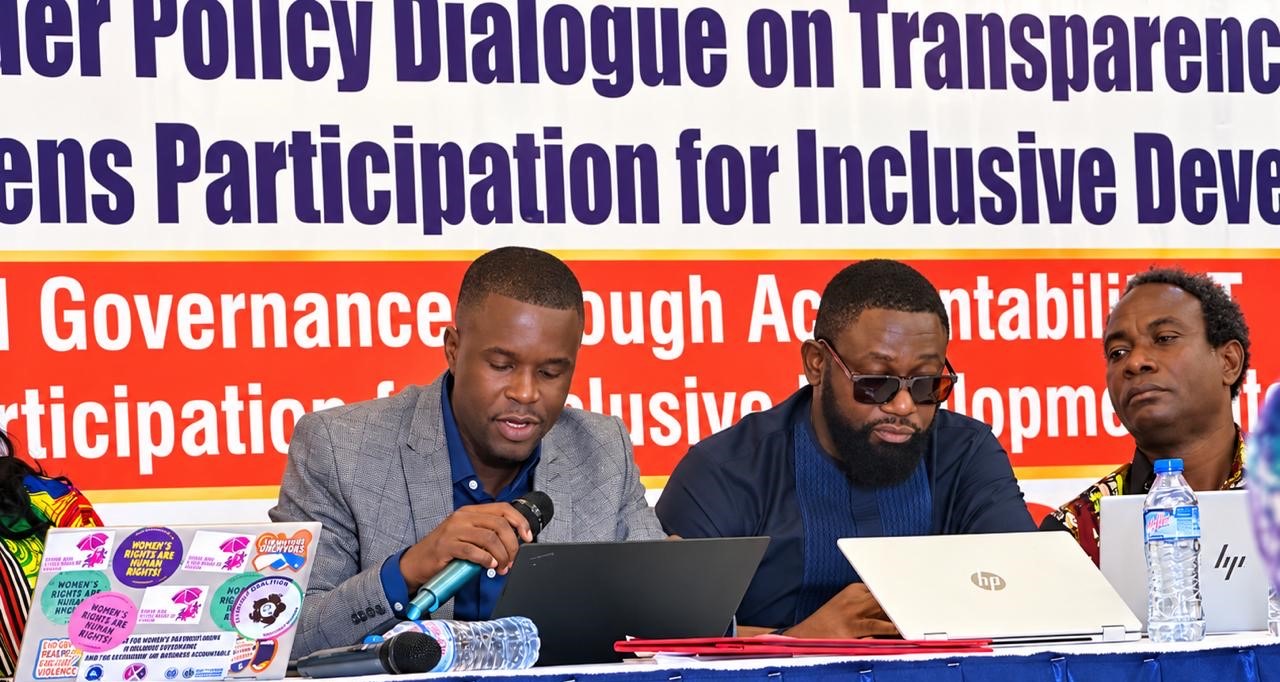
The Press Union of Liberia (PUL) has strongly criticized the administration of President Joseph Nyuma Boakai for its deliberate and systematic effort to undermine Liberia’s Freedom of Information (FOI) regime and dismantle open government practices through the imposition of restrictive confidentiality measures on public servants.
In a paper presented during a two-day Policy Dialogue organized by the Governance Commission (GC) in observance of October as the Month of Good Governance, the PUL expressed grave concern that the government’s actions directly contradict the principles of accountability, transparency, and citizen participation being promoted under this year’s national theme, “Promoting Good Governance through Accountability, Transparency, and Citizens’ Participation for Inclusive Development.”
Troubling Contradiction, Significant Threat to Democratic Governance
Presenting the paper, PUL President Julius Kanubah described as a troubling contradiction between the government’s public commitment to transparency and its recent introduction of a Confidentiality and Non-Disclosure Agreement for civil servants through the Civil Service Agency (CSA).
According to President Kanubah, the policy represents one of the most significant threats to Liberia’s access to information framework since the passage of the Freedom of Information Act 16-years ago.
He argued that the measure effectively reverses hard-won democratic gains by discouraging the disclosure of public information, undermining the authority of the Independent Information Commission (IIC), and promoting a culture of secrecy within government institutions.
“This confidentiality and non-disclosure policy does not merely chip away at our democratic gains; it upends the FOI Act entirely. In effect, it undermines the lawmaking functions of the Legislature, strips the Independent Information Commission (IIC) of its statutory authority, reintroduces state secrecy, and effectively recriminalizes the disclosure of public information by government workers,” Kanubah stated.
The PUL President reminded participants that the Independent Information Commission, the statutory body charged with enforcing the FOI Act, had publicly opposed the confidentiality policy.
He described the government’s decision to proceed despite these objections as a serious setback for transparency, democratic accountability, and public trust.
President Kanubah called on President Boakai’s administration to immediately and unconditionally withdraw the confidentiality agreement, warning that continued implementation would undermine public confidence in government institutions and weaken Liberia’s democratic governance framework.
GC’s Silence Conspicuous and Self-defeating
The PUL also challenged the Governance Commission to publicly address the controversy and demonstrate leadership in defending transparency and accountability principles.
“If this government is genuinely committed to its stated theme of promoting accountability, transparency, and inclusive development, it must align its actions with its rhetoric. Furthermore, we call on the Governance Commission to break its silence. The GC cannot afford to stand by passively while landmark transparency laws are hollowed out. In the face of this policy, the Commission’s silence is conspicuous and self-defeating. This confidentiality policy arrives at an already precarious moment,” President Kanubah asserted.
Barriers Impede FOI Effective Implementation
Beyond concerns surrounding the confidentiality policy, the PUL President highlighted longstanding structural barriers that continue to impede the effective implementation of the FOI Act across Liberia.
He cited findings showing that the majority of government ministries, agencies, and commissions assessed by the Independent Information Commission have failed to appoint Public Information Officers as required by law.
President Kanubah further noted widespread delays in responding to information requests, chronic underfunding of the Independent Information Commission, poor record-management systems, weak digitization efforts, and an entrenched culture of secrecy across sections of government.
The PUL President further observed that open-data practices remain largely underdeveloped due to inadequate institutional commitment, limited publication of government datasets, weak digital infrastructure, donor dependency, and the absence of a comprehensive and enforceable data protection framework.
President Kanubah warned that introducing policies that restrict information access at a time when transparency institutions are already struggling would further undermine Liberia’s democratic progress.
“As one of the foundational stakeholders that championed the enactment of the FOI Act and the creation of the IIC, the Press Union of Liberia is profoundly saddened by the Boakai administration’s decision to weaponize confidentiality agreements against the public interest,” declared Kanubah.
PUL Committed to Good Governance
The Press Union of Liberia reaffirmed its unwavering commitment to defending press freedom, access to information, government accountability, and citizens’ right to participate meaningfully in national governance.
The Union further pledged to continue engaging policymakers, civil society organizations, development partners, and accountability institutions to ensure that transparency remains a cornerstone of Liberia’s democratic development.