








By Abednego Davis
A jury at Criminal Court “C” has convicted three former senior officials of the administration of former President George Weah in connection with the diversion of a humanitarian rice donation valued at more than US$425,000.
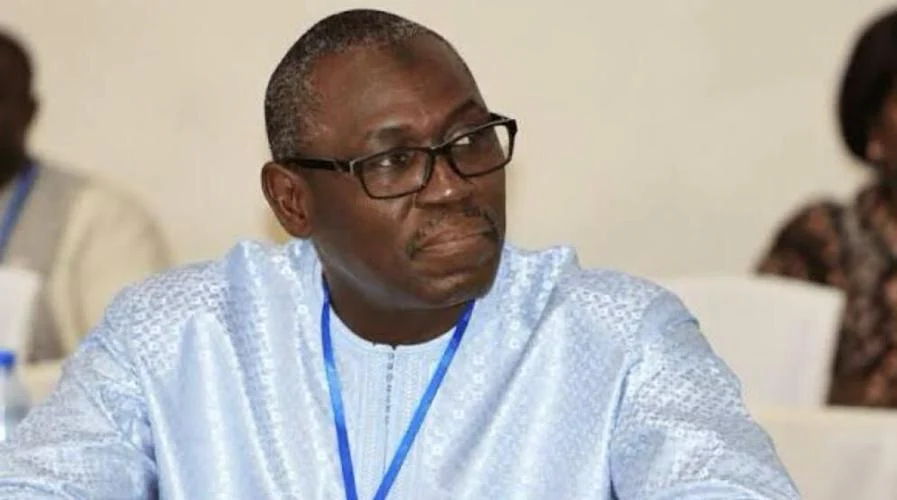
The verdict, delivered Friday after a 40-day trial, found former Foreign Affairs Minister Dee-Maxwell Saah Kemayah, former Internal Affairs Minister Varney A. Sirleaf, and former Deputy Internal Affairs Minister for Administration Momolu Johnson guilty on multiple corruption-related charges linked to the disappearance of more than 25,000 bags of rice donated by the Kingdom of Saudi Arabia.
Presiding Judge Ousman F. Feika received the jury’s verdict.
The ruling represents one of the most significant anti-corruption judgments in recent Liberian history and marks the first known conviction of cabinet-level officials from the former Coalition for Democratic Change (CDC) government on economic crime charges.
Verdict by Defendant
The jury differentiated between the defendants based on the evidence presented against each.
Sirleaf and Johnson were convicted on all five counts contained in the indictment, Theft of Property, Abuse of Office, Misapplication of Entrusted Property, Criminal Conspiracy, Economic Sabotage
Kemayah was convicted on several counts; however, jurors failed to reach a unanimous verdict on charges of Theft of Property and Criminal Conspiracy, resulting in a hung jury on those counts. Prosecutors may seek a retrial or dismiss the unresolved charges.
Former Deputy Foreign Minister Thelma Duncan Sawyer was acquitted on all charges.
Several other defendants were also convicted in connection with the case, including former National Disaster Management Agency (NDMA) Executive Director Henry O. Williams, Augustine Kollie, Archievego Doe, and former General Services Agency (GSA) Deputy Director Edris Bility.
Former GSA Director-General Mary T. Broh, who was initially listed among the defendants, was removed from the case after prosecutors filed a nolle prosequi.
Court officials have yet to release the certified judgment and detailed verdict sheet. Minor discrepancies remain in some public accounts regarding the exact breakdown of convictions by count.
The Case
The prosecution centered on a humanitarian donation made in April 2023 by the King Salman Humanitarian Aid and Relief Center. The donation consisted of 29,412 bags of 25-kilogram rice, valued at approximately US$425,918.
The rice was donated to the Government of Liberia through the Ministry of Foreign Affairs and was intended for distribution by the NDMA to disaster victims and vulnerable communities.
According to prosecutors and the Assets Recovery and Property Retrieval Taskforce (AREPT), approximately 25,054 bags, representing more than 85 percent of the shipment, could not be accounted for through official distribution channels.
The state alleged that the rice was diverted and distributed outside legally authorized procedures.
Prosecution and Defense Arguments
Prosecutors argued that public officials entrusted with the donation violated their legal responsibilities by authorizing or participating in the transfer and distribution of the rice outside statutory procedures.
The charges included theft of property, misapplication of entrusted property, abuse of office, criminal conspiracy, and economic sabotage under Liberia’s Penal Law.
The defense maintained that the movement of the rice from NDMA storage facilities in Gbarnga to General Services Agency warehouses was an administrative decision prompted by logistical and storage concerns rather than a criminal scheme.
Jurors ultimately rejected that argument, concluding that the transfers lacked proper legal authorization.
Political and Legal Significance
The convictions are expected to have significant political implications, particularly as the current administration of President Joseph Nyuma Boakai has pledged to strengthen accountability and combat corruption.
Legal analysts have cautioned that the significance of the case should remain rooted in the evidence presented rather than political affiliations.
“The central issue is whether the evidence established criminal wrongdoing and whether the law is being applied consistently, regardless of who is in power,” one legal observer said.
The opposition CDC has not yet announced a formal position on the verdict.
What next?
Sentencing is expected to take place during a separate hearing, where prosecutors and defense attorneys will present arguments regarding aggravating and mitigating factors.
The court must also determine issues of restitution relating to the value of the unaccounted-for rice.
Defense lawyers are expected to pursue post-trial motions and may appeal the convictions to the Supreme Court of Liberia.
The unresolved charges against Kemayah remain subject to possible retrial.
Beyond the criminal proceedings, the case has drawn renewed attention to concerns about oversight and accountability in the management of humanitarian assistance and public resources.