

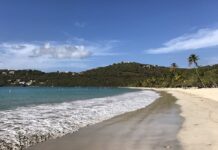





Along Liberia’s southeastern coastline, where fishing communities increasingly confront the harsh realities of coastal erosion, rising sea levels, and declining natural resources, a new initiative is bringing hope for a more resilient future.
The Embassy of Ireland has committed €1.5 million to support a three-year coastal resilience and mangrove conservation project aimed at protecting vulnerable communities in Sinoe and Maryland counties while creating sustainable economic opportunities for local residents.
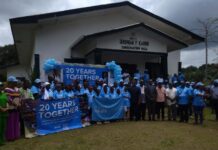
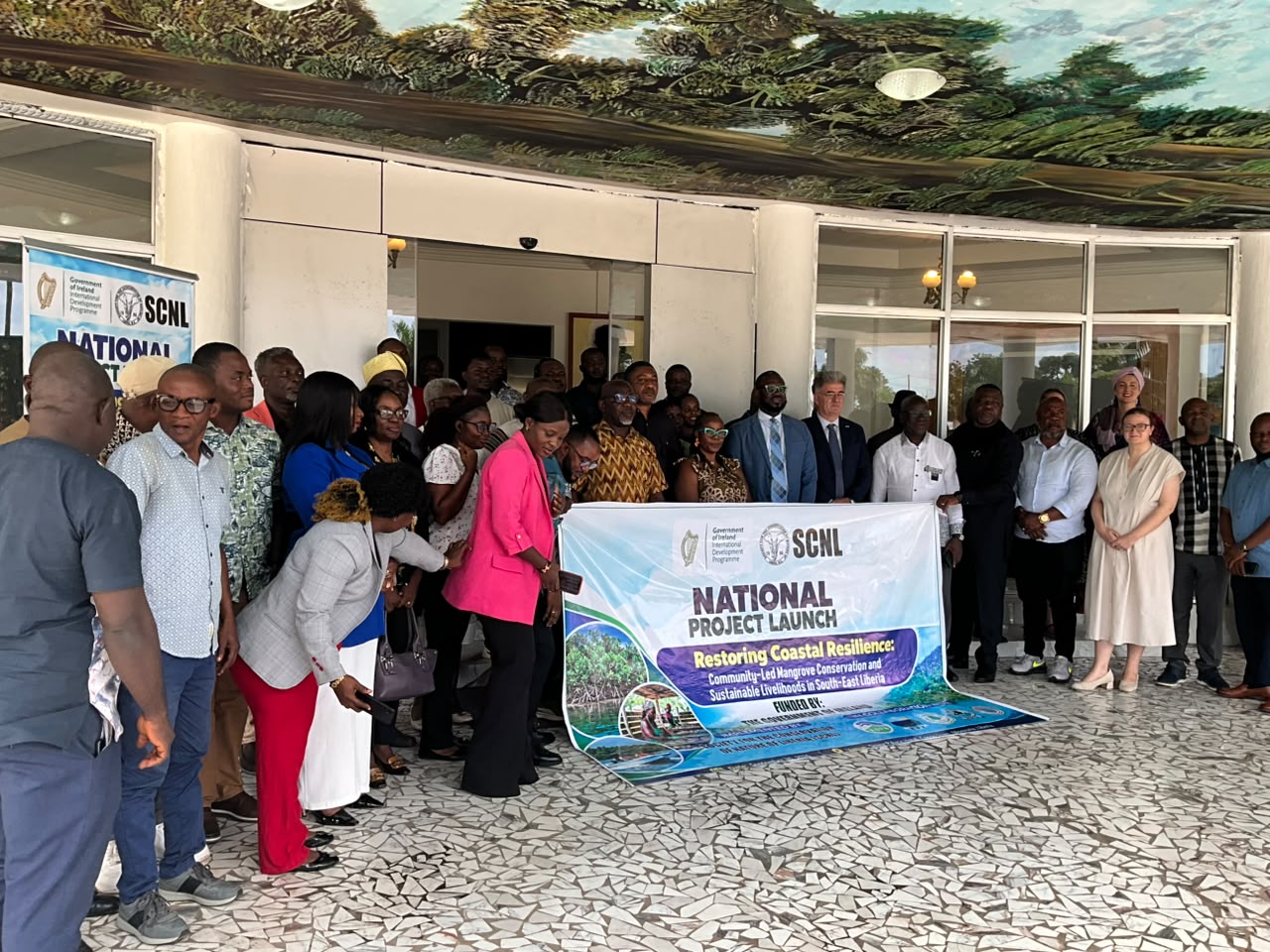
The initiative, titled “Restoring Coastal Resilience: Community-led Mangrove Conservation and Sustainable Livelihoods in South-East Liberia,” was officially launched Wednesday, September 30, 2026, at Sinkor Palace in Congo Town.
Implemented by the Society for the Conservation of Nature of Liberia (SCNL) with technical support from the Royal Society for the Protection of Birds (RSPB), the project seeks to restore degraded mangrove ecosystems, strengthen community stewardship of natural resources, and improve livelihoods for thousands of coastal residents facing increasing climate-related threats.
A Lifeline for Coastal Communities
For many families living along Liberia’s southeastern shoreline, the sea is both a source of sustenance and a growing source of uncertainty.
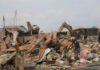
As climate change accelerates coastal degradation, communities are experiencing increased erosion, saltwater intrusion, and the loss of critical natural habitats. The new project is designed to address these challenges by combining environmental restoration with economic empowerment.
Welcoming guests at the launch ceremony, SCNL Executive Director Michael F. Garbo described the initiative as a major step forward in protecting Liberia’s coastal ecosystems while ensuring that conservation delivers tangible benefits to local communities.
The project will run from September 2026 through August 2029 and is expected to directly benefit approximately 3,500 people, according to SCNL Landscape Manager James P. Mulbah.
A strong emphasis has been placed on inclusion, with women expected to occupy at least 40 percent of project participation and leadership roles.
Restoring Nature’s First Line of Defense
At the heart of the initiative is an ambitious environmental restoration agenda.
Project partners plan to rehabilitate 50 hectares of mangrove forests and restore 20 hectares of coastal coconut plantations across targeted communities.
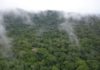
Mangrove ecosystems are widely recognized as one of nature’s most effective defenses against coastal erosion and storm surges. They also serve as critical breeding grounds for fish and other marine life, making them essential to both biodiversity conservation and local food security.
The restoration effort builds upon earlier conservation successes in the region. Speaking at the launch, Irish Ambassador to Liberia Gerard Considine noted that a previous SCNL pilot project in Sinoe County successfully established more than 20,000 mangrove seedlings in community nurseries.
Linking Conservation with Livelihoods
Beyond restoring ecosystems, the initiative seeks to strengthen household incomes and reduce pressure on natural resources.
Fisherfolk in participating communities will receive approved fishing nets, boat engines, and energy-efficient fish-drying facilities designed to support sustainable fishing practices while increasing productivity and earnings.
Women will benefit through strengthened Village Savings and Loan Associations (VSLAs) and additional livelihood support programs intended to expand economic opportunities and enhance household resilience.
Recognizing the importance of youth engagement, the project will also establish nature clubs in ten schools, helping to foster environmental awareness and conservation leadership among the next generation.
Ireland’s Commitment to Climate Resilience
For Ireland, the investment reflects a broader commitment to climate action, sustainable development, and community-centered conservation.
“By investing in people, we protect coastlines,” Ambassador Considine said.
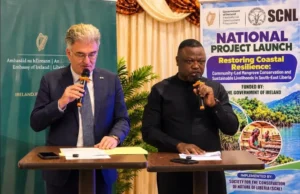
He emphasized that the initiative will contribute to Liberia’s climate ambitions while generating valuable environmental data that could support the country’s emerging carbon market.
According to the ambassador, the project aligns with both Liberia’s national development priorities and the Embassy of Ireland’s 2024-2028 strategy for Liberia, reinforcing cooperation between the two countries on climate resilience and natural resource management.
The Challenges Facing Conservation
The launch event also highlighted the broader challenges confronting Liberia’s conservation sector.
Dr. Anika Hillers, Country Director of the Wild Chimpanzee Foundation (WCF), called for greater public recognition of conservation’s contribution to national development.
She noted that conservation organizations play an increasingly important role in protecting biodiversity, supporting rural livelihoods, and helping communities adapt to climate change, yet their impact often receives limited attention.
“People need to know what conservation is doing in this country,” Dr. Hillers said. “Conservation is contributing more than many other sectors realize, but its work is often not visible enough.”
At the same time, she acknowledged the growing expectations placed on conservation organizations by communities seeking support for roads, schools, clinics, bridges, and other infrastructure needs.
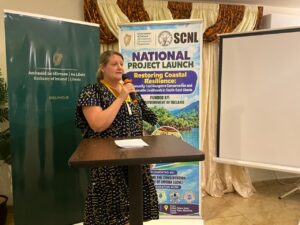
“To do conservation in Liberia is very challenging because people expect you to do all,” she said. “Communities want conservation projects to provide roads and other infrastructure alongside protecting forests and wildlife. These needs are important, but conservation alone cannot solve every development challenge facing communities.”
Dr. Hillers called for stronger collaboration among government institutions, development partners, local communities, and conservation organizations to ensure environmental initiatives receive the support needed to achieve lasting impact.
A More Resilient Future
As Ambassador Considine officially launched the project, he stressed that communities must remain at the center of conservation efforts, emphasizing that those who safeguard Liberia’s natural resources should also be among those who benefit most from them.
For the coastal residents of Sinoe and Maryland counties, the initiative represents far more than a conservation project. It offers a pathway toward stronger livelihoods, healthier ecosystems, and greater resilience in the face of mounting climate threats.
In a region where the ocean’s encroachment increasingly threatens both homes and livelihoods, Ireland’s investment is being viewed not only as support for environmental restoration, but as an investment in the long-term future of Liberia’s southeastern coast.
Francis G. Boayue contributed to this article